Event participation is not a single activity you add to a programme. It is a choice about what guests will be doing at each point: listening, discussing, making something, taking a turn or celebrating together. A successful corporate gathering gives those modes a purpose. Asking everybody to stay highly involved throughout the day can be as tiring as asking them to sit through one presentation after another.
For organisers in Singapore, the useful starting point is the desired response. Do you want colleagues to understand an announcement, meet someone new, contribute an idea or share a memorable moment? Each outcome suggests a different format. The examples below show how audience sessions, hosted games, creative workshops and informal spaces can play complementary roles without turning the whole event into a competition.

Event participation starts with the response you want
Epic Contents
A presentation is appropriate when everyone needs the same information at the same time. A conversation is more useful when people need to compare experiences. A making activity gives guests a tangible task and something to show one another. A hosted game introduces anticipation and a clear public moment. Start with that distinction before selecting equipment or entertainment.
For example, a company announcement may need a short seated session followed by discussion over refreshments. An appreciation event may benefit from a shared ceremony, then activities guests can choose freely. A team celebration could include a hosted challenge between otherwise independent stations. Write the desired response beside each programme segment; this quickly reveals whether several consecutive items are asking guests to do exactly the same thing.
Give hosted games a clear beginning and finish
A hosted gameshow draws attention toward a common focal point. The prize-wheel example illustrates the appeal of a visible turn-taking format: participants can see where the action happens, and spectators can follow the moment without handling equipment themselves. The host connects the instructions, the next participant and the result, giving the audience a story to follow.
Decide how guests enter the activity and what happens when their turn ends. A friendly demonstration can be more useful than a long verbal explanation. Think about whether the audience should cheer, offer suggestions or simply watch. A format designed for willing volunteers lets more reserved guests remain involved as spectators, rather than making public performance a condition of enjoying the event.

Prize boards and campaign graphics in reference photographs are examples from those events. They do not establish a standard prize allowance or package. Your proposal should specify the actual game format, host requirements and prize arrangements for your own programme.
Use hands-on activities to create small conversations
A workshop changes the scale of interaction. Instead of looking toward a stage, guests focus on the materials in front of them and the people beside them. The shrink-art table shown here gives participants a shared task with individual results. They can compare colours, ask a neighbour about a design and watch different ideas develop without needing a formal discussion prompt.
Choose a task that leaves room for conversation. If every step requires close attention to an instructor, guests may have little opportunity to talk. If the activity is too open-ended, newcomers may struggle to begin. A simple demonstration, an achievable starting point and scope for personal choices can create a comfortable middle ground. Confirm suitable materials and facilitator support with the activity provider.

Explore Epic’s event planning services to discuss how facilitated activities could fit the purpose of your gathering. The activity should support the programme’s intended outcome, rather than becoming a disconnected attraction selected only because it photographs well.
Offer independent choices between shared moments
A market-style arrangement supports a different rhythm. Guests can browse, pause and choose where to spend time. This can be useful after a session where everyone has followed the same schedule. The festive-market photograph shows how several destinations can create interest across a larger space, rather than concentrating every interaction at a single stage.
The important distinction is between choice and uncertainty. Guests should understand which areas they may visit and whether anything has a fixed starting time. If a shared segment is approaching, make that transition easy to follow. A programme can allow independent exploration while still bringing everyone back for an announcement or celebration. Clear invitations work better than expecting guests to infer the plan from the equipment alone.

Make recognition a shared experience
An awards segment asks the audience to witness and acknowledge someone else’s achievement. The stage is therefore more than a decorative background: it gives the recipient a clear place in the event. Consider how the introduction, walk onto the stage, presentation and applause connect. A concise explanation of the achievement helps the wider audience understand why the moment matters.
Recognition also benefits from variation. A series of identical introductions can blur together, while a short personal detail makes each recipient easier to remember. Keep the focus on the contribution being celebrated. The long-service stage pictured here is a visual reference for a dedicated presentation setting; the exact staging and lighting should follow your venue and programme requirements.

Reserve a collective moment for the whole room
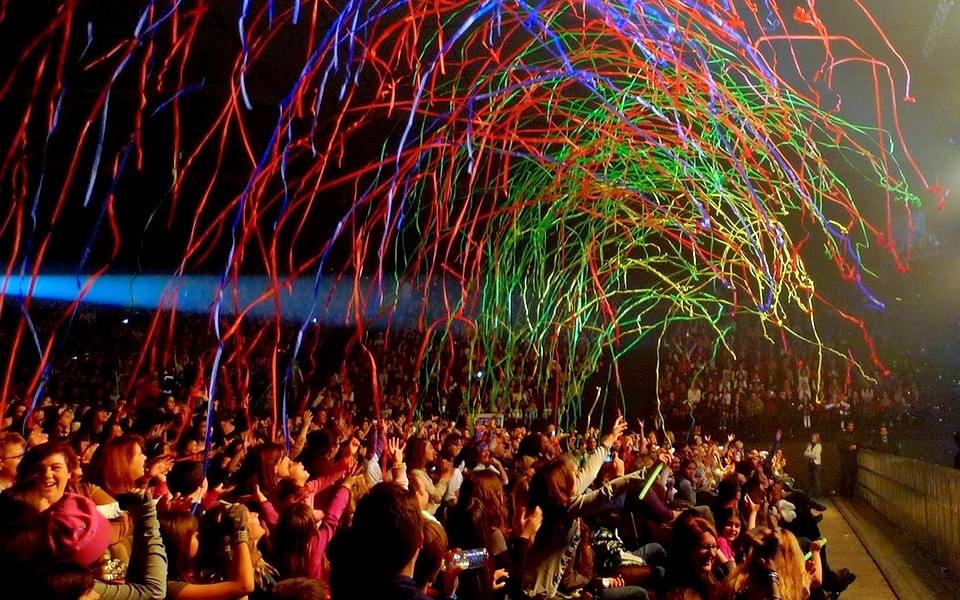
A shared finish can give guests a clear sense that something has happened together. It might be a group photograph, a final toast, an announcement or a celebratory visual effect. The streamer photograph illustrates the energy of a moment that reaches the whole audience at once. That effect works because it punctuates the programme, rather than competing with an ongoing conversation or presentation.
Discuss the practical suitability of any effect with the venue and production team. The desired mood, room conditions and cleanup arrangements all influence the choice. A collective finish does not need to be elaborate; its value comes from timing and shared attention. Decide what guests should do next so the celebration flows naturally into departure, refreshments or the next part of the event.

Different ways guests take part
The gallery brings together public and personal forms of involvement. Ceremony guests and gameshow participants share visible moments with an audience. A completed keychain, a terrace conversation and a printed takeaway offer quieter ways to connect with an occasion. These formats can coexist, giving people more than one comfortable way to participate.


Build a programme with a change of pace
Review your event as a sequence of guest experiences rather than a list of suppliers. Mark the moments when everyone watches, when small groups interact and when guests choose independently. Look for a useful change of pace. An energetic game may lead into a relaxed conversation, while a hands-on activity may prepare guests for a shared presentation of what they created.
For a celebration that brings employees and their families together, explore our corporate family day planning service. For examples of activity formats, Big Top’s fringe activities provide a relevant starting point. Share the audience profile and the response you want with your planner, then choose a combination that gives each part of the programme a clear reason to exist.